
By Veronica Kariuki
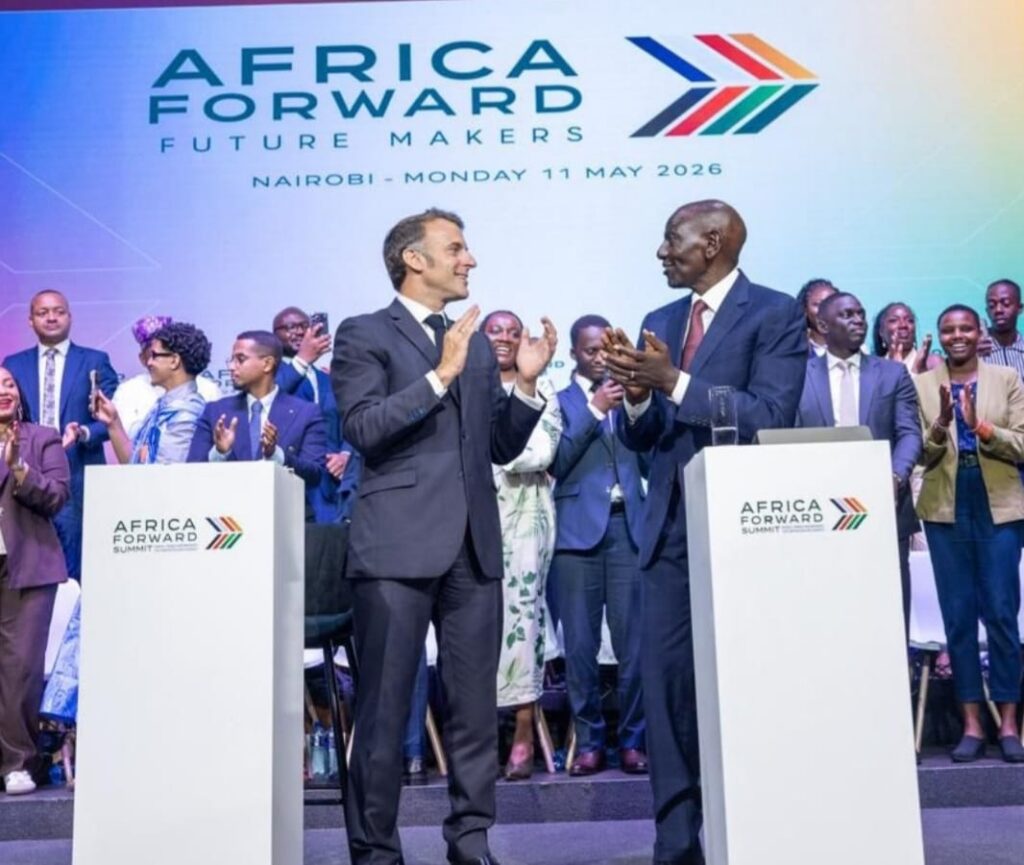
Over the last few weeks, I had the privilege of participating in engagements leading up to and during the Africa Forward Summit. I found myself in rooms that brought together leaders, policymakers, entrepreneurs, innovators, youth voices and the African diaspora. There was energy, ambition and perhaps most importantly, a sense that Africa’s future cannot continue to be discussed without Africans shaping the agenda.
The conversations centered around youth employment, artificial intelligence, digital sovereignty, investment, infrastructure, entrepreneurship, mobility and partnerships. There was also a growing recognition that Africa is not simply a market or a beneficiary; it is increasingly positioning itself as a partner and actor in shaping global solutions.
One recurring message stood out: Africa’s greatest resource remains its people, especially its youth. President William Ruto emphasized Africa’s demographic strength, while President Emmanuel Macron highlighted partnerships built on equal footing and the need for stronger mechanisms to turn ambition into action.
The summit generated strong headlines, including the announcement of €23 billion in investment commitments across sectors such as infrastructure, digital technologies, energy, innovation and entrepreneurship. Major actors and companies featured in discussions and announcements, raising expectations around the scale of opportunity.
But beyond the figures, another question emerges: who are the actors behind these commitments, where exactly will these investments land, and who ultimately benefits? How much reaches SMEs, startups, youth-led initiatives and diaspora businesses?
Because summits often succeed in generating momentum. They create visibility, networks and announcements. They gather people around shared themes and common aspirations. But the true measure of success is rarely what happens on stage. It is what happens months later.
Will conversations on digital sovereignty translate into investments in digital infrastructure and computing capacity? Will discussions around AI create pathways for African youth to build and own technology rather than only consume it? Will partnerships become more accessible to SMEs, innovators and diaspora-led initiatives? Will financing instruments become practical tools rather than concepts discussed in conference rooms?
For those of us in the diaspora, another important question remains: what role do we play after the cameras leave?
The diaspora increasingly acts as a bridge across ecosystems, markets and communities, playing a growing role in economic development, social impact, and the transfer of knowledge and expertise. There was visible recognition during the summit that diaspora engagement matters. But recognition alone is not enough.
There is an opportunity to create more structured pathways for engagement: diaspora investment platforms, mentorship networks, youth exchanges, stronger business corridors and practical frameworks that move beyond symbolic inclusion.
The Paris–Nairobi corridor should not remain a phrase. It should become measurable.
Personally, one of the most encouraging aspects of the summit was not simply meeting influential people. It was witnessing accessibility and a willingness to engage. The most valuable moments were often not the speeches themselves, but the conversations around them ; exchanges that allowed questions, ideas and different perspectives.
Now comes the more difficult phase: follow-through. Africa does not need more declarations alone. It requires implementation, continuity, and institutions and partnerships that outlive events.
If the summit was about future makers, then perhaps the next chapter is ensuring that those future makers have the tools, structures and opportunities to actually build.
That may ultimately be the real test of Africa Forward.